
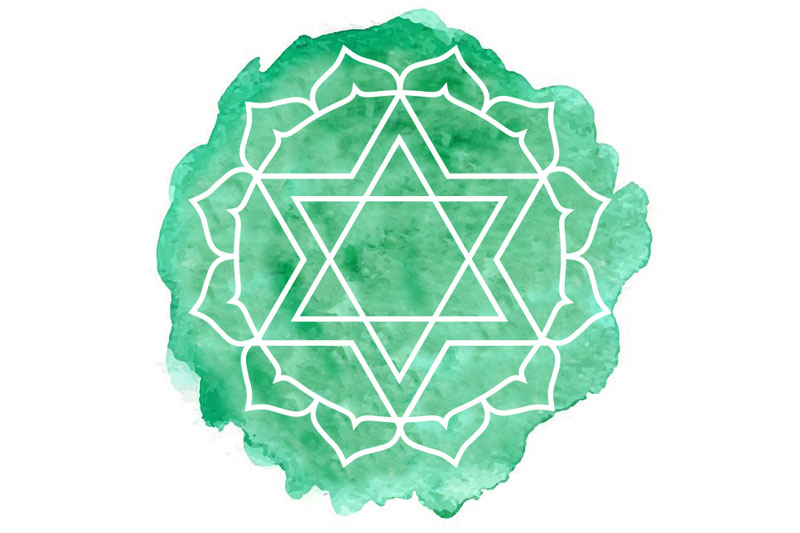
The heart chakra, also known as the anahata chakra is anatomically located at the level of the sternum and physiologically at the cardiac plexus. This chakra is dominant during the ages of 21 to 28 and relates to sustenance. The Bija Mantra for this chakra is “yam”. Lord Vishnu, in the form of himself or Lord Krishna, is the Hindu Deity associated with this chakra. Chanting the mantra “Om Namo Bhagavate Vasudevaya” aligns this chakra and keeps it clear of blockages. It is auspicious to chant this mantra on Thursdays as this is the day of the week dedicated to Lord Vishnu. Anahata is also associated with the air element and due to this association some people also pray to Lord Hanuman. Lord Hanuman is known as “pawan putra” or “son of air” and people pray to overcome fears and any issues with this chakra.

Crystals that can be used during meditation or prayer to help cleanse the Anahata chakra are green aventurine, green apatite, rose quartz, malachite, emerald, peridot and jade. Essential oils that can be used to keep the Heart Chakra aligned via aromatherapy and other practices are tea tree oil, peppermint, lavender, eucalyptus and tulsi/holy basil. The tulsi plant is said to have many healing properties and is a plant that promotes detachment, which allows you to follow your dharma.
Imbalances in this chakra can occur when one has too many attachments in this world. This is something I have struggled with for the past year and have spent a lot of energy and time working on. This imbalance can manifest physically as lymphatic issues in the axillary or cervical regions and leads to upper back pain or breast issues. Which I have personally also experienced. The anahata chakra is related to the thymus gland, which is predominantly known for assisting in T cell function in our immune systems. Therefore, imbalances can precipitate as infections and poor immunity. A type of yoga that can assist with imbalances is Kriya yoga and should be done under experienced supervision.
 jovanna.ca